
articles
Stockingfoot vs. Bootfoot Waders: Which One Is For You?
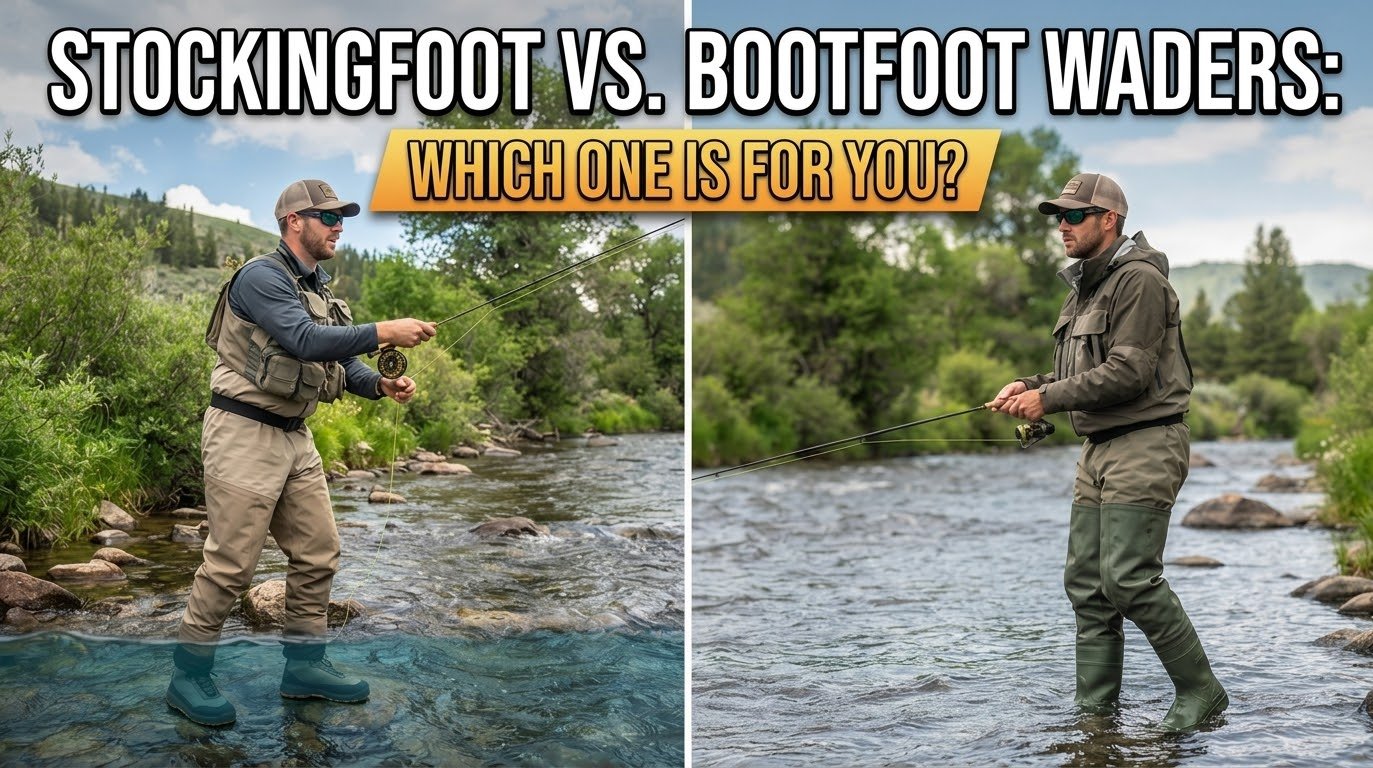
It’s the first question on the product page, and it trips up a lot of people shopping for waders: stockingfoot or bootfoot? The two styles do the same basic job of keeping water out, but they feel completely different on the water and on the walk to it. Here’s how they compare, so the choice gets easier.
What the Names Actually Mean
Stockingfoot waders end in a neoprene bootie, basically a waterproof sock. A separate pair of wading boots goes over the top, which means the boots are a purchase of their own.
Bootfoot waders have the boots built in. They step in and go, with nothing else to buy or lace up.
The Case for Stockingfoot
Most fly anglers end up in stockingfoot waders, and the reason is simple: support. A real wading boot with a laced ankle and a proper sole handles slick river rock, long walks and uneven banks better than a molded boot can. If the day involves hiking in to the water, covering a lot of ground or wading across a stream, this is the style that tends to feel best.
Compass 360 makes several. The Deadfall uses a breathable 4-ply polyester upper with 4mm neoprene booties and attached gravel guards, which keep sand and pebbles out of the boots. The Stillwater II follows the same stockingfoot design with contour-fit, double-taped 4mm neoprene booties.
The tradeoff is cost and fuss. Wading boots are an extra expense, and getting boots, booties and gravel guards sorted takes a few extra minutes at the trailhead.
The Case for Bootfoot
Bootfoot waders are the simple option, and simple counts for a lot. They go on in a minute, and there’s nothing to adjust or forget. They also tend to be warmer, since the foot isn’t sitting inside a loose boot full of cold water. That’s why they’re so common with duck hunters, who stand in cold water for hours and care more about staying put than hiking.
Compass 360’s bootfoot options include the Windward, a PVC chest wader with a 420-denier nylon shell, sonically sealed seams and molded, reinforced PVC boots with cleated soles. There’s also the Oxbow, a one-piece poly/rubber design with a 300-denier polyester shell and vulcanized rubber construction.
The downside is support. A molded boot doesn’t hold the ankle the way a laced boot does, so long hikes or rocky streambeds are harder going. And since the boot is part of the wader, the fit can’t be adjusted. If the boot size is wrong, the whole wader is wrong.
Side by Side
| Stockingfoot | Bootfoot | |
|---|---|---|
| Ankle support | Better, with laced wading boots | Basic |
| Walking distance | Good for long hikes | Better for short walks |
| Setup time | A few extra minutes | Quick |
| Cost | Waders plus boots | One purchase |
| Fit | Boots can be sized separately | Boot size is fixed |
| Warmth | Depends on layers and boots | Often warmer standing still |
| Best for | Fly fishing, rivers, hiking in | Ponds, marshes, hunting, simple days |
How to Decide
A few questions usually settle it:
- How far is the walk? Anything more than a short stroll favors stockingfoot.
- Is the bottom slick or rocky? Real wading boots grip better, so stockingfoot wins.
- Standing in still, cold water? Bootfoot’s warmth makes more sense here.
- Buying a first pair on a budget? Bootfoot avoids the extra boot cost, though it limits where you can comfortably wade.
- Hard to size a boot? Stockingfoot lets you pick body size and boot size separately.
A Note on Sizing
Bootfoot waders are sized by boot, so it helps to know the exact shoe size and to leave room for thick socks. Stockingfoot waders are sized by body, using height, chest and inseam, and the wading boots are sized separately. Wading boots usually run a size up from street shoes to fit over the neoprene bootie, so check the manufacturer’s chart before ordering.
Bottom Line
Neither style is better across the board. Stockingfoot suits anglers who move, bootfoot suits people who stand and wait, and both have a place in the Compass 360 lineup.